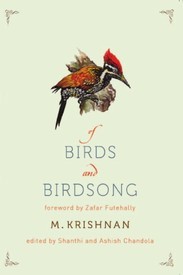
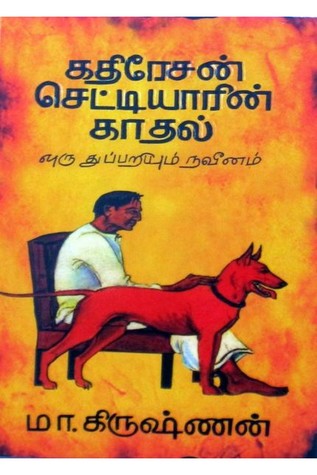
14 Published BooksM. Krishnan
Madhaviah Krishnan (30 June 1912 – 18 February 1996), better known as M. Krishnan, was a pioneering Indian wildlife photographer, writer and naturalist.
M. Krishnan was born in Tirunelveli on 30 June 1912 and was the youngest of eight siblings. His father was a Tamil writer and reformer A. Madhaviah ( A. Madhaviah) who worked with the Salt and Abkari Department of the Government of Madras.
Krishnan studied in the Hindu High School and developed an interest in literature, art and nature. His family lived in Mylapore, and in those days it was covered in shrub and teemed with bird life, jackals and blackbucks. Krishnan even had a pet mongoose. In 1927 Krishnan joined the Presidency College and graduated with a BA in 1931. He also took a keen interest in botany, taught by Professor P. F. Fyson. He accompanied Fyson on field trips to the Nilgiris and the Kodaikanal hills and also acquired watercolour painting techniques from Professor Fyson's wife.
He initially wrote in several Tamil magazines. In 1942, he was offered employment by the Maharaja of Sandur near Bellary in Karnataka. Krishnan took up this position and the works he undertook included being a schoolteacher, judge, publicity officer and a political secretary to the Maharaja. He spent a lot of his time wandering in the wilderness, observing nature, tried grazing sheep, breeding pigeons to work in a pigeon postal system and writing. His essays on wildlife photography were published in The Illustrated Weekly of India in a series entitled Wildlife Photographers Diary. He also wrote in The Hindu by the pen-name of Z. In the Sunday Statesman he wrote under his own name.
In 1949, Sandur was unified in the Indian republic. From 1950 he wrote a bi-weekly column in The Statesman of Calcutta called 'Country Notebook'. In this column he wrote about various aspects of natural history. This column continued for 46 years, from 1950 to 18 February 1996, the day he died.
Along with his whimsical prose, poetry and drawing he used photography as another tool for expression. He worked only with black and white film. His equipment was, according to naturalist E. P. Gee, 'a large, composite affair, with the body of one make and a tele lens of another, and other parts and accessories all ingeniously mounted together by himself. I cannot swear that I saw proverbial bootlace used to fix them all together, but I am sure there must have been some wire and hoop somewhere!' He called his equipment the Super Ponderosa. Krishnan was a not a big fan of technological advances and was unimpressed by the display of India's first jet aircraft. He declared them as mechanical, chemical and inhuman and was impressed more by the living muscular speed of animals... and if you want to see something sustained in its effortless, rhythmic impetuosity, you should watch a herd of blackbuck going all out for a few miles-there is tangible, real speed for you.
Krishnan was awarded the Padma Shri by the Indian government in 1960 for his work and the prestigious Jawaharlal Nehru Fellowship in 1968. His birth centenary in 2012, was commemorated by the Madras Naturalists' Society, Prakriti Foundation and the IIT Wildlife Club. The Madras Naturalists' Society which featured most of Krishnan's writings in their journal Blackbuck in the 1990s gives away the "M. Krishnan Memorial Nature Writing Award" annually.