13 Published BooksMarshall Kirk McKusick
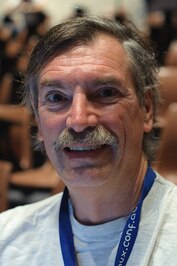
Marshall Kirk McKusick is an American computer scientist known for his extensive contributions to BSD UNIX, from the early days of the system in the 1980s to ongoing work with FreeBSD. He served on the board of the USENIX Association from 1986 to 1992 and again from 2000 to 2006, holding the position of president from 1990 to 1992 and 2000 to 2002. He was a member of the editorial board of ACM Queue from 2002 to 2019 and served on the board of the FreeBSD Foundation from 2012 to 2022. Among colleagues and friends, he is known simply as "Kirk."
He earned a B.S. in electrical engineering from Cornell University, followed by two M.S. degrees and a Ph.D. in computer science from the University of California, Berkeley. His involvement with BSD began at Berkeley, where he shared an office with Bill Joy, one of the system's original architects. His most significant contributions have been in the area of file systems, particularly in the development of the Berkeley Fast File System (FFS). In the late 1990s, he introduced soft updates, which improved disk integrity following crashes or power failures, and later helped refine the Unix File System (UFS) into UFS2. A well-known Easter egg in UFS2 references his birthdate in its magic number definition.
McKusick was also instrumental in implementing filesystem snapshots and background fsck, which allow systems to recover quickly from unexpected shutdowns. His influence extends beyond technical contributions, as his Design and Implementation book series has been highly regarded in the field of computer science, shaping the development of BSD-based operating systems. Additionally, he holds the copyright for the BSD Daemon, the widely recognized mascot of BSD.
His published works include The Design and Implementation of the 4.3BSD UNIX Operating System and its successor volumes, co-authored with key BSD developers. He has also contributed essays on the history and evolution of BSD, such as Twenty Years of Berkeley Unix in Open Sources: Voices from the Open Source Revolution. His collaborations with George Neville-Neil and Robert Watson have resulted in definitive texts on FreeBSD's architecture and design.

